
2026 10th International Conference on Hydrodynamics, Energy and Electric Power System (HEEPS 2026)
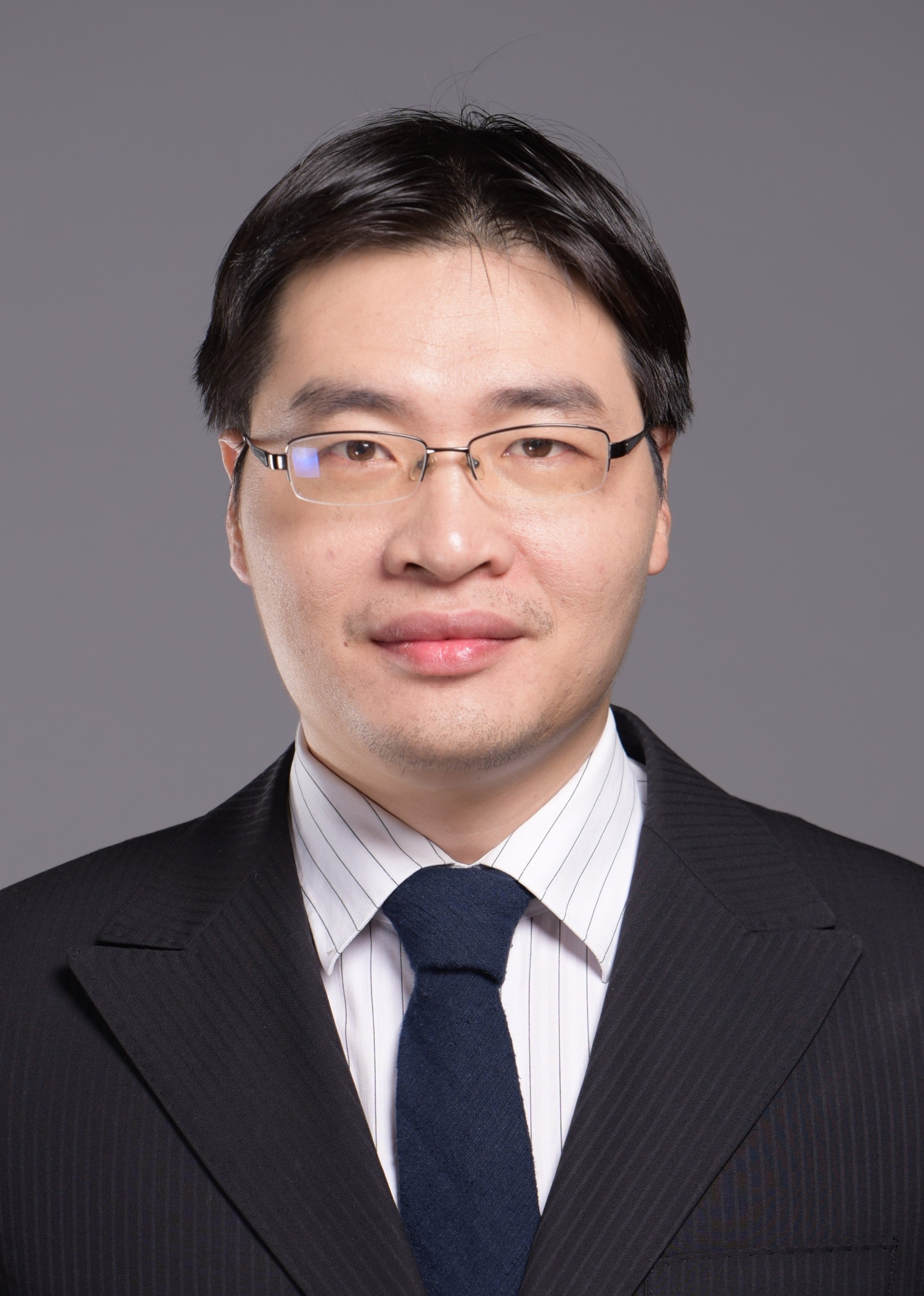
Prof. Weixi Huang
Tsinghua University
Weixi Huang is a Tenured Professor at the School of Aerospace Engineering, Tsinghua University, and a recipient of the National Science Fund for Distinguished Young Scholars (2024). His main research areas include numerical methods, mechanisms, and control of turbulent flows with complex boundaries, as well as fluid–structure interaction and biomimetic flows. His research outcomes have been applied to drag reduction and noise mitigation for underwater vehicles, and to high-altitude wind energy utilization.
He has published more than 100 SCI papers in leading fluid mechanics journals such as JFM, JCP, PoF, and PRF, with over 3,000 citations. He received the First Prize of the Natural Science Award of the Science and Technology Award of the Chinese Society of Theoretical and Applied Mechanics (ranked second, 2025).
He currently serves as Associate Editor of TAML and TJSAS, as well as a member of the editorial boards of IJHFF, AIA, Advances in Mechanics, and Progress in Hydrodynamics Research and Development. He also holds academic positions including member of the Advisory Board of the International Conference on Turbulence and Shear Flow Phenomena (TSFP), Executive Committee Member of the Asian Fluid Mechanics Committee (AFMC), Council Member and Fluid Mechanics Committee Member of the Chinese Society of Theoretical and Applied Mechanics, and Council Member and Deputy Director of the Fluid Mechanics Committee of the Beijing Society of Mechanics.
He teaches undergraduate courses in Fluid Mechanics and Viscous Fluid Mechanics, and graduate courses in Introduction to Turbulence (a Tsinghua University excellent course) and Theory and Simulation of Fluid–Structure–Thermal Coupling. He has supervised students who won the First Prize at the National Challenge Cup and the Grand Prize of the Tsinghua University Challenge Cup.
Prof. Yangwei LIU
Beihang University
Nanchang Hangkong University
Prof. Saim Memon
Birmingham City University
Professor Saim Memon is an accomplished CEO and Industrial Professor of Renewable Energy Engineering, renowned for bridging the gap between academic research, industrial innovation, and global market impact. With a distinguished academic career rooted in the UK, he holds a PhD in Mechanical, Electrical, and Manufacturing Engineering (Loughborough University, UK), a PGCert in Teaching Qualification (University of Aberdeen, Scotland), an MSc in Mechatronics (Staffordshire University, UK), and a BEng (Hons) in Electrical Engineering (First-Class Distinction) (MUET). A Chartered Engineer and Fellow of the Higher Education Academy, Prof. Memon also holds Qualified Teacher Status, awarded by the General Teaching Council for Scotland.
Recognised as a global thought leader, Prof. Memon ranks among the top 0.96% worldwide in the field of Energy and the top 0.86% across all disciplines (ScholarGPS) over the past five years, underscoring his prolific contributions to academia and industry. His exceptional track record includes over 140 research publications, leadership of 41 teaching modules spanning electrical, electronic, mechanical, and renewable energy engineering, with consistently outstanding student satisfaction rates exceeding 90%. He has successfully supervised multiple doctoral, master’s, and undergraduate research projects, cultivating the next generation of engineering innovators. Prof. Memon’s academic influence is further amplified through 50+ invited and keynote lectures, collaborations with researchers from over 40 countries, 2200+ citations, and an h-index of 28+ and i10-index of 57+. As a thought leader, he has served as Editor-in-Chief and Guest Editor for several prestigious journals and as a reviewer for over 40 peer-reviewed publications. His contributions to academic leadership include steering research groups, developing and validating MSc, MEng, and BEng (Hons) programmes, and pioneering degree apprenticeships in engineering. A world-class expert in multidisciplinary research, Prof. Memon specialises in cutting-edge advancements for net-zero energy solutions. His research portfolio spans thermal management of electric vehicle batteries, vacuum insulation technologies, translucent vacuum insulation panels, energy-efficient materials for smart windows, vacuum-based photovoltaic solar thermal systems, thermoelectric devices, and fast-charging mechanisms for electric vehicles. His innovative work integrates renewable energy systems into smart grids, addressing critical challenges in sustainable energy and mobility. Prof. Saim Memon’s vision and expertise continue to inspire advancements in renewable energy engineering, shaping a more sustainable and energy-efficient future on a global scale.
Title: Integrating Vacuum-Based Thermal Insulation into Energy Systems: Overcoming End-Use Losses in a Net-Zero World

Prof. Biao Wang
Sichuan University
Biao Wang is currently a Professor at West China Hospital, Sichuan University. He has been selected for the National Natural Science Foundation of China (NSFC) Excellent Young Scientists Fund (Overseas), the Shanghai Leading Talent Program (Overseas) / Young Leading Talent Program, the Shanghai Major Contribution Individual Merit Award, the “Haina Young Scholar” Program of Sichuan University, and the “Weichang Scholar” Program of Shanghai University. He has led projects funded by the National Natural Science Foundation of China (NSFC) General Program and participated in the first batch of key projects under the 14th Five-Year Plan of the Central Military Commission Science and Technology Commission. His research focuses on intelligent self-powered ultrasonic sensing technologies and devices. He has published more than 60 SCI-indexed papers in international flagship journals, including Science Advances, Energy & Environmental Science, and Advanced Materials. One paper was selected as a back-cover and featured paper, and nine papers have been recognized as ESI Highly Cited Papers, with the highest citation count exceeding 400. He has applied for more than 30 invention patents and has been granted more than 10 invention patents in China and the United States.
Prof. Wei Wang
Tianjin University